 by
by The modern National Football League is an absolute financial juggernaut, generating billions in annual revenue while commanding the undivided attention of millions of fans worldwide. Yet, behind the glitz of prime-time broadcasts and the roar of sold-out stadiums lies a complex corporate entity facing intense scrutiny over its internal operations. As the sports world evolves, the league’s front offices and ownership groups are discovering that sustained commercial success is tethered directly to systemic equity.
A progressive NFL workplace culture diversity policies and leadership accountability future analysis demonstrates that the league’s ability to modernize its corporate identity will actively dictate its cultural relevance, legal stability, and brand equity over the next decade.
The Historic Roots and Evolution of Intentional Hiring
To properly understand the league’s current structural crossroads, one must first look at the institutional safeguards implemented over the last two decades. The creation of the foundational Rooney Rule in 2003 was a groundbreaking moment, establishing strict interview mandates to combat the historically low number of minority head coaches at the professional level. However, a modern NFL workplace culture diversity policies and leadership accountability future analysis reveals that these foundational regulations are experiencing severe structural fatigue.
Over the years, the policy has been aggressively expanded to require teams to interview at least two external minority candidates for head coaching vacancies and at least one for coordinator tracks, yet the real-world results continue to spark intense public debate.
The Gritty Reality of the 2026 Head Coaching Cycle
The immediate urgency of this systemic conversation was brought into sharp focus following the conclusion of the most recent head coaching hiring cycle. Despite ten highly coveted head coaching positions opening up across the league, the hiring pipeline resulted in just a single minority selection, leaving the total number of Black head coaches at a historic low of just three across thirty-two franchises. Incorporating this jarring data into our NFL workplace culture diversity policies and leadership accountability future analysis exposes a massive disconnect between policy intent and concrete front-office execution.
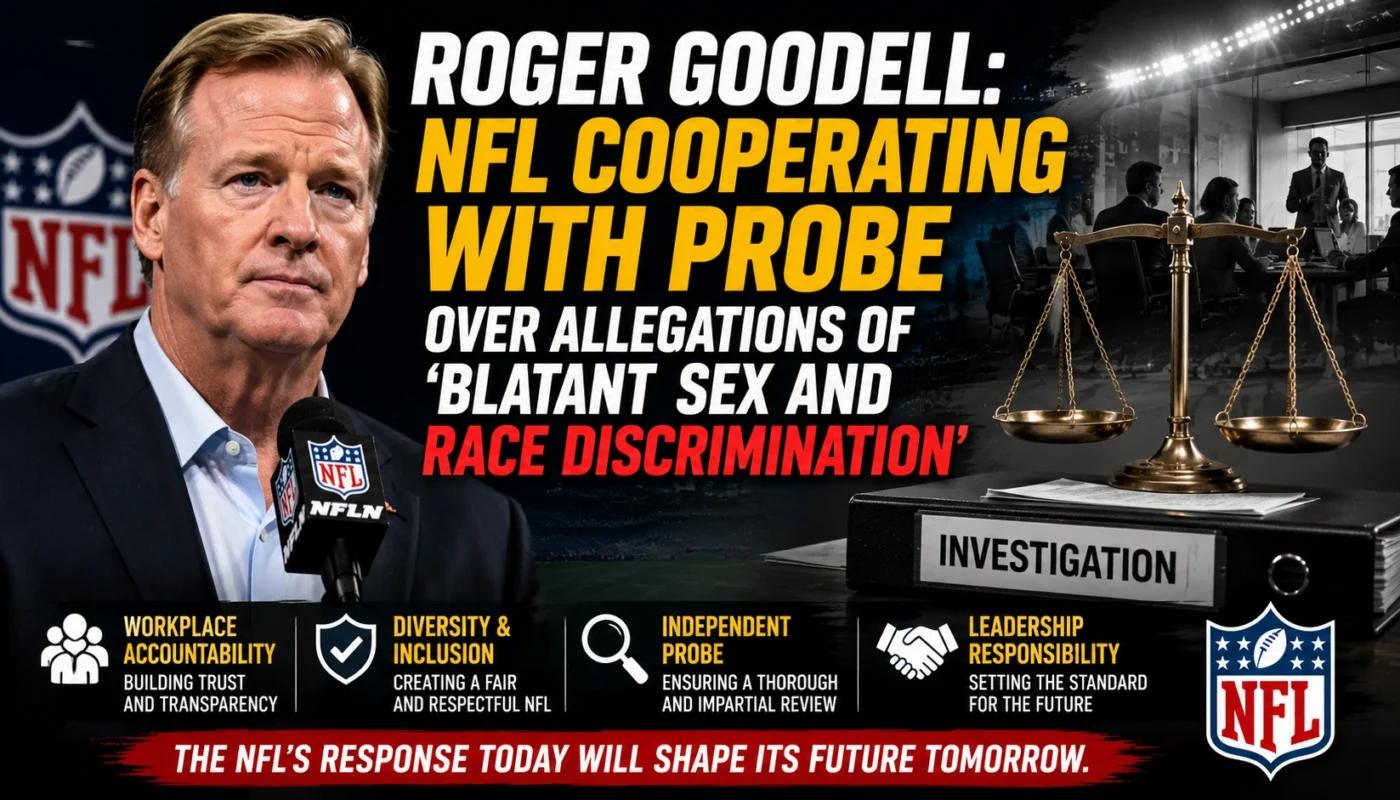
While Commissioner Roger Goodell has repeatedly affirmed his strict corporate commitment to diversity, equity, and inclusion, critics point out that mandatory check-the-box interviews cannot completely dismantle deeply embedded old-boys’-club hiring networks.
Demographics on the Gridiron vs. the Front Office
The intense social friction surrounding the league’s hiring practices stems from a glaring demographic disparity between the individuals playing the game and those running the organizations. Statistical tracking shows that Black athletes make up over fifty-three percent of active players on rosters, yet minority representation in head coaching and general manager roles sits under ten percent. A comprehensive NFL workplace culture diversity policies and leadership accountability future analysis must highlight this profound power imbalance as a long-term risk to workplace morale and public player relations.
When elite athletes consistently see a glass ceiling blocking qualified minority coaches from securing top-tier decision-making authority, it breeds corporate distrust and stains the league’s broader internal culture.
The Current Structural Framework of NFL Diversity Policies
| Policy Mechanism | Target Executive Roles | Explicit Mandatory Criteria | Current Strategic Incentive |
| The Rooney Rule (Expanded) | Head Coach, GM, & Coordinators | Must interview at least 2 external minority candidates | Expands the baseline corporate interview pool |
| Quarterback Coach Mandate | Quarterback Coaches | Must interview at least 1 minority/female candidate | Prioritizes the primary head coach training ground |
| Draft Capital Incentive | Head Coach & General Manager | Third-round compensatory picks for developing talent | Rewards clubs when minority staff get hired away |
Overhauling the Vital Quarterback Coach Pipeline
Recognizing that head coaches are overwhelmingly pulled from the ranks of offensive coordinators and quarterbacks coaches, the league office has pivotally refocused its administrative pipeline strategy. The updated mandate requiring teams to interview minority and female candidates for open quarterback coach positions targets the exact root where the leadership disparity initially forms. A tactical NFL workplace culture diversity policies and leadership accountability future analysis identifies this specific policy adjustment as a highly effective, long-term solution for building a qualified, diverse executive ecosystem.
By injecting diverse talent directly into the passing-game development space, the league is working to naturally cultivate the next generation of innovative offensive play-callers who will eventually command front-office interview rooms.
The Power and Limits of Draft Capital Incentives
In an effort to move past basic interview mandates, the league introduced a clever capitalistic mechanism that directly rewards teams for actively developing diverse leadership talent. Under this rule, franchises that lose a minority coach or front-office executive to a head coach or general manager position elsewhere receive compensatory third-round draft selections for two consecutive seasons. A thorough NFL workplace culture diversity policies and leadership accountability future analysis proves that while draft picks are the ultimate currency for general managers, this incentive structure still relies entirely on individual team altruism.
While it successfully encourages organizations to build diverse coaching fellowships, it does not fundamentally penalize ownership groups that consistently refuse to hire minority candidates for their own vacancies.
Navigating a Shifting Macro Corporate Landscape
The internal struggle over the league’s cultural identity is playing out against a turbulent broader political and corporate environment across the United States. With major multinational corporations scaling back their diversity departments and federal legal challenges mounting against traditional corporate initiatives, professional sports leagues are facing intense external pressure to weaken their internal mandates. Our forward-looking NFL workplace culture diversity policies and leadership accountability future analysis indicates that if the league capitulates to these conservative corporate trends, it risks alienating its primary consumer base and losing its competitive edge among younger demographics.
Navigating this cultural minefield requires absolute transparency and a firm realization that inclusive hiring is a business necessity, not an optional public relations exercise.
Corporate Sponsorships and Consumer Trust
Beyond the ethical imperatives, the modernization of internal workplace standards is bound tightly to the league’s multi-billion-dollar marketing and corporate sponsorship ecosystem. Major multinational brands are increasingly protecting their consumer goodwill by refusing to align with sports entities that tolerate toxic workplace environments or archaic hiring practices. An economic NFL workplace culture diversity policies and leadership accountability future analysis shows that corporate sponsors will pull their marketing dollars if the league suffers catastrophic public relations blowback over systemic exclusion.
To protect its massive streaming and broadcasting media rights valuations, the league’s executive leadership must actively enforce internal equity, proving to corporate partners that the shield represents a modern, progressive workplace.
The Ultimate Goal: A Workplace Culture Beyond Mandates
Looking down the road toward the next decade of professional football, the true metric of success will not be the number of mandatory interviews conducted, but the organic transformation of the league’s workplace environment. An optimistic NFL workplace culture diversity policies and leadership accountability future analysis envisions a future where systemic mandates like the Rooney Rule become completely obsolete because equitable hiring practices are naturally woven into every front office. Achieving this status requires team owners to actively abandon comfortable nepotism, look outside their traditional social circles, and hold fellow executives strictly accountable for corporate culture failures.
Only when inclusive hiring is treated as a fundamental driver of competitive on-field success will the league truly transform its workplace culture for the modern era.
Conclusion: Engineering a Sustainable Future Shield
Ultimately, the battle over the league’s internal workplace standards is a defining fight for the soul and longevity of professional football. As this comprehensive NFL workplace culture diversity policies and leadership accountability future analysis highlights, basic administrative adjustments and surface-level compliance are no longer enough to satisfy players, sponsors, or an increasingly conscious public. The extreme demographic disparities in leadership roles demand a profound, authentic shift in ownership accountability and institutional transparency. By aggressively building diverse talent pipelines and enforcing strict workplace standards, the NFL can ensure that its front offices match the world-class excellence displayed on the gridiron every Sunday.
Frequently Asked Questions
Q: What are the current mandatory interview rules for an open NFL head coaching position?
A: Under the current version of the Rooney Rule, every franchise with a head coaching vacancy must conduct thorough, in-person interviews with at least two external minority candidates before they are legally permitted to make an official hire.
Q: How does the NFL reward teams that successfully develop minority coaching or front-office talent?
A: According to our NFL workplace culture diversity policies and leadership accountability future analysis, if a team develops a minority coach or executive who is subsequently hired as a head coach or GM by another franchise, the developing team is rewarded with third-round compensatory draft picks for two consecutive seasons.
Q: Why did the league specifically implement diversity interview mandates for quarterback coaches?
A: The league introduced this rule because the quarterback coach position is the primary stepping stone to becoming an offensive coordinator and, ultimately, a head coach, making it a critical choke point for diversifying the leadership pipeline.