 by
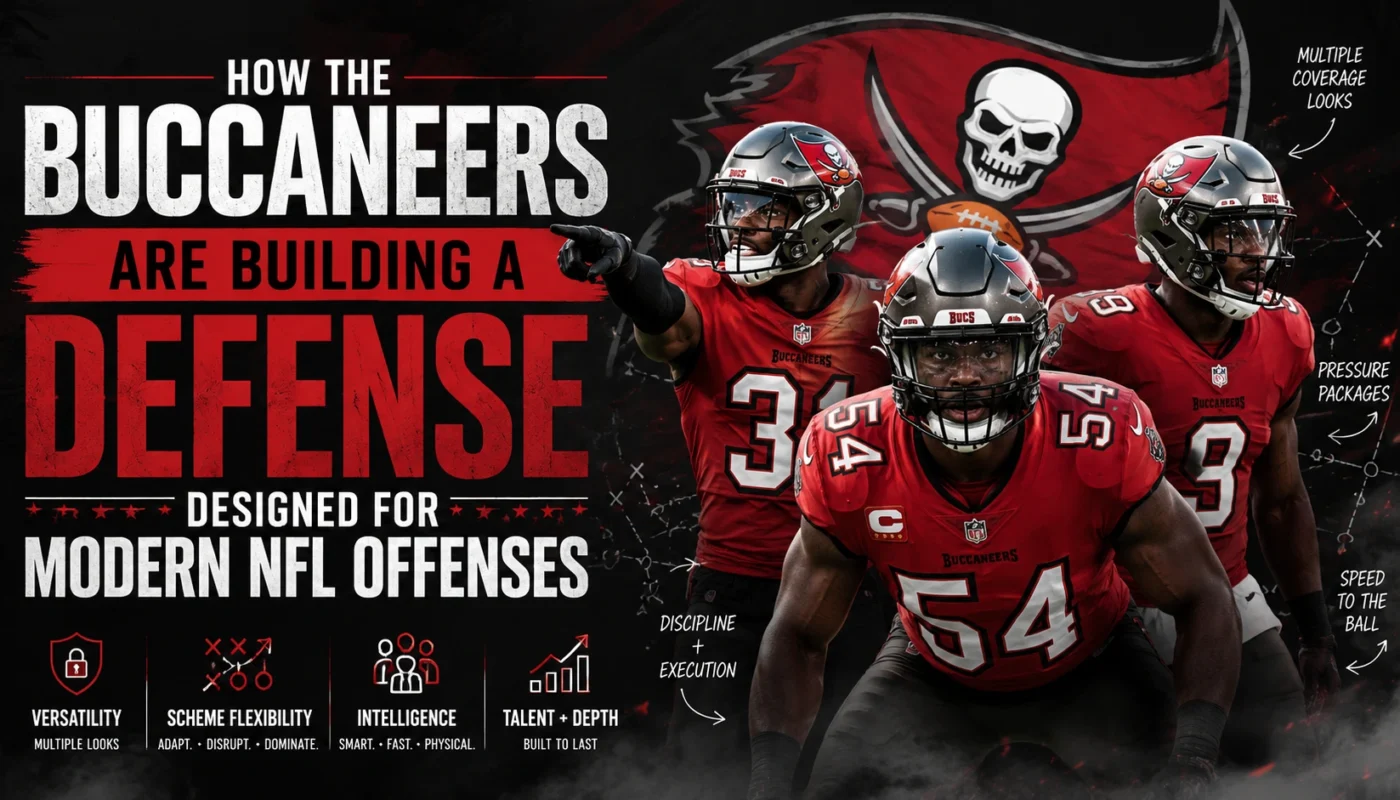
by The modern NFL has become a league dominated by speed, spacing, motion, and elite quarterback play. Offenses are evolving faster than ever, forcing defenses to completely rethink how they operate. That challenge explains how the Tampa Bay Buccaneers are building a defense designed for modern NFL offenses in 2026 while trying to remain competitive in an increasingly explosive NFC landscape.
The Buccaneers understand that traditional defensive systems no longer consistently survive against today’s offensive creativity. Teams now rely heavily on versatile playmakers, quick passing attacks, dual-threat quarterbacks, and matchup-based schemes that punish predictable defenses. Tampa Bay’s response has been clear: build a faster, smarter, more adaptable defense capable of adjusting to modern football realities.
As the 2026 season approaches, the Buccaneers may quietly possess one of the NFL’s most strategically interesting defensive rebuilds.
Todd Bowles Still Shapes Tampa Bay’s Defensive Identity
At the center of how the Tampa Bay Buccaneers are building a defense designed for modern NFL offenses in 2026 is head coach Todd Bowles. Few defensive minds in football understand offensive evolution better than Bowles, whose aggressive style has consistently challenged opposing quarterbacks.
Bowles recognizes that modern offenses thrive when defenses become predictable. That understanding is why Tampa Bay prioritizes disguise, versatility, and pre-snap confusion across its defensive system. The Buccaneers rarely want quarterbacks feeling comfortable before the ball is snapped.
Unlike older defensive models built entirely around physical dominance, Tampa Bay’s approach focuses on flexibility. Defensive players are expected to handle multiple responsibilities rather than remain locked into rigid assignments. That versatility gives Bowles the freedom to create pressure packages that adapt weekly depending on opponents.
Modern NFL offenses constantly search for mismatches, especially against slower linebackers and limited defensive backs. Bowles counters that by emphasizing athletic defenders capable of surviving in space. This philosophical shift remains central to how the Tampa Bay Buccaneers are building a defense designed for modern NFL offenses in 2026 entering a critical season.
Speed Has Become Tampa Bay’s Biggest Priority
One major reason how the Tampa Bay Buccaneers are building a defense designed for modern NFL offenses in 2026 looks different from previous years is the organization’s renewed focus on speed.
Modern NFL offenses attack horizontally as much as vertically. Teams use jet motion, screen passes, run-pass options, and quick timing concepts to force defenders into uncomfortable situations. Slow defenses simply cannot survive consistently against these systems anymore.
Tampa Bay’s front office clearly understands this reality. Recent roster moves show a strong emphasis on athletic linebackers, explosive edge rushers, and defensive backs capable of covering large portions of the field quickly.
The Buccaneers are no longer building defenses solely to stop power running games. Instead, they are preparing for offenses led by mobile quarterbacks and dynamic playmakers who stress defenses on every snap.
This speed-first approach also impacts substitution patterns. Tampa Bay wants defenders who can remain on the field regardless of down or situation. Avoiding predictable personnel groupings helps disguise coverage schemes and reduces offensive advantages. That strategic thinking is another important part of how the Tampa Bay Buccaneers are building a defense designed for modern NFL offenses in 2026.
Versatile Defensive Backs Are Becoming Essential
Another major factor behind how the Tampa Bay Buccaneers are building a defense designed for modern NFL offenses in 2026 is the growing importance of versatile defensive backs.
The NFL increasingly revolves around matchup football. Offensive coordinators constantly move receivers around formations looking for favorable coverage situations. Traditional cornerback roles have become less effective against modern passing systems.
Tampa Bay now prioritizes defensive backs capable of playing multiple positions. Safeties may cover slot receivers. Cornerbacks may blitz or rotate into zone coverage. Nickel defenders must handle both run support and pass coverage responsibilities.
This flexibility creates uncertainty for opposing quarterbacks. Modern offenses depend heavily on identifying defensive coverages before the snap. Tampa Bay’s positionless defensive philosophy makes that process significantly harder.
The Buccaneers also value communication more than ever. Defensive backs must react instantly against offenses using motion and tempo to create confusion. Smart, adaptable defenders become essential in today’s NFL.
As offenses continue evolving, secondary versatility will likely define the league’s best defenses. Tampa Bay appears fully committed to that vision, which explains another layer of how the Tampa Bay Buccaneers are building a defense designed for modern NFL offenses in 2026.
Pass Rush Still Drives Championship Defenses
Despite all the schematic evolution happening across football, one truth remains unchanged: pressure still destroys offenses. That reality remains a core reason how the Tampa Bay Buccaneers are building a defense designed for modern NFL offenses in 2026 revolves heavily around pass-rush development.
Modern quarterbacks are incredibly dangerous when given clean pockets and predictable reads. Tampa Bay knows even elite coverage eventually breaks down without consistent pressure disrupting timing.
The Buccaneers continue investing heavily in edge rushers capable of winning one-on-one matchups. Young defenders like Rueben Bain represent the type of explosive athletes Tampa Bay believes can impact modern games consistently.
Bowles also understands that pressure no longer means simply blitzing recklessly. Modern offenses punish predictable blitz packages with quick throws and spacing concepts. Tampa Bay instead focuses on simulated pressure, disguised fronts, and versatile rush alignments designed to create confusion.
Interior defensive pressure has also become more important. Mobile quarterbacks often escape edge rushers by stepping forward inside the pocket. Tampa Bay wants defensive linemen capable of collapsing the middle and eliminating escape lanes.
This balance between athletic edge pressure and interior disruption is a huge component of how the Tampa Bay Buccaneers are building a defense designed for modern NFL offenses in 2026.
Linebackers Must Do More Than Ever Before
Few positions have changed more dramatically than linebacker, and that transformation heavily influences how the Tampa Bay Buccaneers are building a defense designed for modern NFL offenses in 2026.
Modern linebackers must cover tight ends, defend running backs in space, stop mobile quarterbacks, and still remain effective against the run. Traditional downhill linebackers often become liabilities against today’s offenses.
Tampa Bay now prioritizes athleticism and versatility at the position. Linebackers must process information quickly while reacting against motion-heavy offenses designed to create hesitation.
Coverage ability matters more than ever. Offensive coordinators constantly target slower linebackers through crossing routes, option concepts, and running back mismatches. The Buccaneers are clearly searching for defenders capable of surviving those situations without requiring constant safety help.
Communication also becomes critical. Linebackers serve as defensive quarterbacks responsible for adjusting alignments and relaying coverage responsibilities. Against fast-paced offenses, mistakes happen instantly when communication fails.
The Buccaneers believe intelligent, athletic linebackers can neutralize many modern offensive advantages. That belief remains another major part of how the Tampa Bay Buccaneers are building a defense designed for modern NFL offenses in 2026.
Tampa Bay Wants More Positionless Football
One fascinating trend shaping how the Tampa Bay Buccaneers are building a defense designed for modern NFL offenses in 2026 is the organization’s embrace of positionless football.
Modern offenses create chaos by forcing defenders into uncomfortable roles. Tampa Bay counters that by developing defenders capable of handling multiple responsibilities across different alignments.
Edge rushers may occasionally drop into coverage. Safeties might rotate into linebacker roles. Cornerbacks could blitz unexpectedly. Defensive linemen may move across multiple gaps depending on matchups.
This versatility allows Tampa Bay to disguise intentions more effectively. Offensive coordinators struggle when they cannot identify defensive structures before the snap. Positionless football creates hesitation, which often leads to mistakes.
The Buccaneers are also building greater roster flexibility through this strategy. Injuries become less devastating when players can handle multiple roles within the system.
More NFL teams are moving toward hybrid defensive models, but Tampa Bay appears especially committed to maximizing defensive unpredictability. That commitment defines another important aspect of how the Tampa Bay Buccaneers are building a defense designed for modern NFL offenses in 2026.
Young Defensive Talent Could Accelerate the Rebuild
A major hidden factor behind how the Tampa Bay Buccaneers are building a defense designed for modern NFL offenses in 2026 is the organization’s growing collection of young defensive talent.
Championship-caliber defenses require more than star veterans. Sustainable success usually depends on younger players developing into reliable contributors while maintaining financial flexibility across the roster.
Tampa Bay’s recent draft strategy reflects that long-term vision. The Buccaneers continue targeting athletic defenders with developmental upside rather than focusing entirely on immediate production.
The coaching staff also appears confident in its ability to develop raw talent within Bowles’ system. Young defenders are being trained to understand multiple responsibilities early in their careers, preparing them for modern NFL demands.
If several younger players develop quickly, Tampa Bay’s defensive rebuild could accelerate faster than expected. That possibility adds another intriguing dimension to how the Tampa Bay Buccaneers are building a defense designed for modern NFL offenses in 2026 heading into the future.
Why This Defensive Strategy Matters Long Term
The Buccaneers are not simply trying to improve defensively for one season. Instead, how the Tampa Bay Buccaneers are building a defense designed for modern NFL offenses in 2026 reflects a broader organizational understanding of where football is heading.
Offenses will continue becoming faster and more creative. Quarterbacks will become more mobile. Position versatility will matter even more. Defenses unable to adapt risk becoming obsolete quickly.
Tampa Bay appears determined to stay ahead of those trends rather than reacting too late. That proactive mindset could help the Buccaneers remain competitive even as the NFC continues evolving.
This defensive philosophy also improves playoff potential. Modern postseason football increasingly favors defenses capable of adjusting quickly against different offensive styles. Tampa Bay’s flexibility gives the team a better chance to survive against elite quarterbacks during playoff runs.
If the Buccaneers successfully execute this long-term vision, they could eventually build one of the NFC’s most dangerous defensive units.
Final Thoughts
The NFL’s offensive revolution has forced defenses across the league to evolve rapidly. The Tampa Bay Buccaneers appear fully aware of that reality, and their roster-building strategy reflects a modern understanding of football’s future.
Speed, versatility, communication, disguise, and adaptability now define elite defenses far more than traditional size and physicality alone. Tampa Bay is embracing those trends aggressively under Todd Bowles’ leadership.
From versatile defensive backs to athletic linebackers and explosive pass rushers, every major decision supports how the Tampa Bay Buccaneers are building a defense designed for modern NFL offenses in 2026.
The process may still require time, but the vision is becoming increasingly clear. Tampa Bay is no longer building defenses for the NFL of the past. The Buccaneers are preparing for the next era of professional football — and that strategy could make them one of the league’s most dangerous defensive teams in the years ahead.