 by
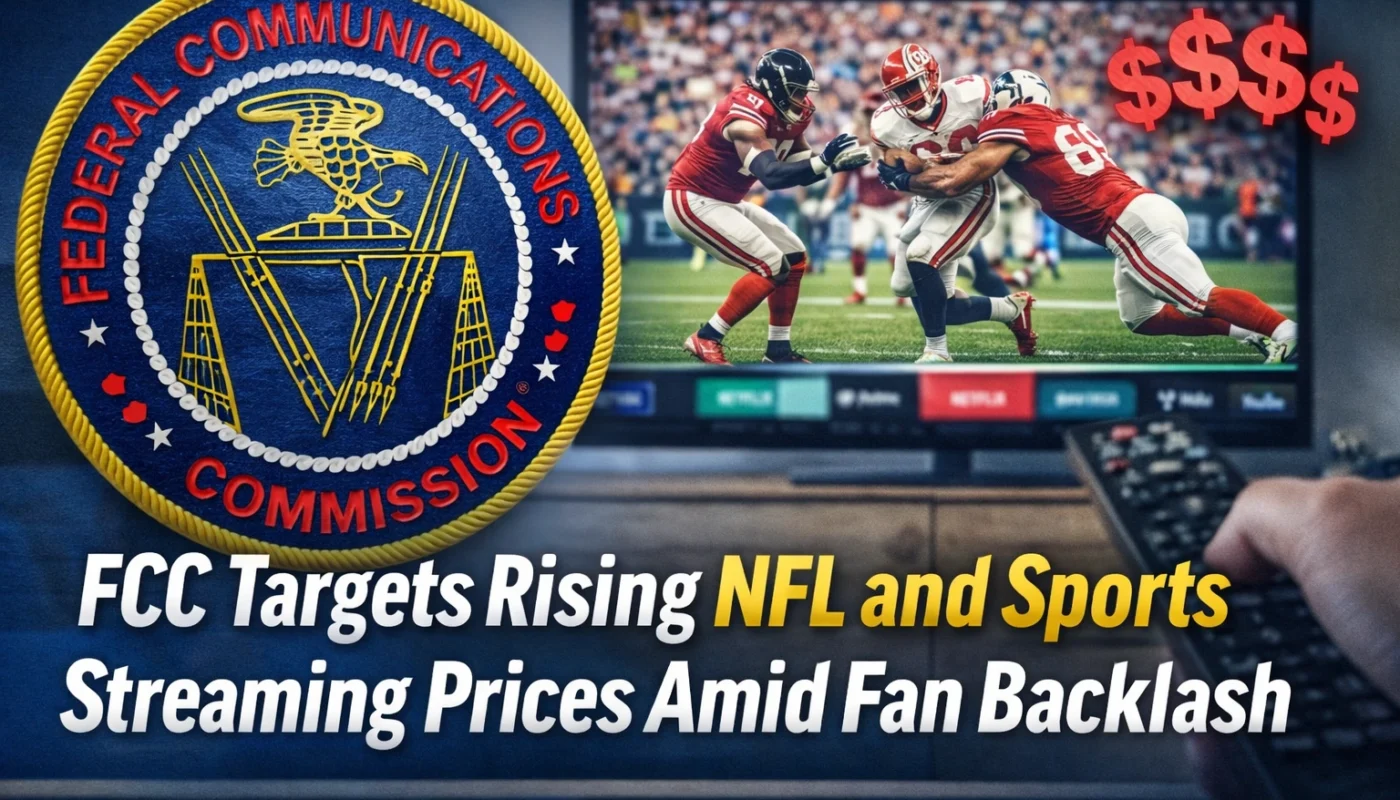
by NFL Streaming Prices FCC Investigation has taken center stage as the Federal Communications Commission (FCC) finally blows the whistle on a trend leaving sports fans feeling sacked in the wallet every single week. In a major move this February 2026, the commission announced a formal inquiry into the “fragmentation” of sports media, specifically examining how the migration of games to paid digital platforms is impacting consumers. The probe comes amid growing public outrage over a viewing landscape where following your favorite team now demands a dozen different subscriptions, multiple apps, and a mountain of monthly fees.
The $1,500 Problem: Why the FCC is Stepping In
For decades, the deal was simple: grab an antenna, flip to a local station, and watch the game. Those days are fading fast as marquee matchups move exclusively to services like Amazon Prime, Netflix, and Peacock. According to early data from the NFL Streaming Prices FCC Investigation, a fan trying to watch every single NFL game in the 2025-2026 season would have needed to subscribe to 10 different services, with total costs estimated to exceed $1,500 annually. This “streamflation” has reached a breaking point, prompting regulators to ask if the current marketplace still serves the public interest or just corporate bottom lines.
The “Antitrust” Threat: Could the NFL Lose Its Special Status?
The spicy core of this debate centers on the Sports Broadcasting Act of 1961, which gives leagues a special antitrust exemption to bundle and sell their media rights. However, legal experts noted in the NFL Streaming Prices FCC Investigation that this 65-year-old law was written specifically for broadcast television, not for internet-only paywalls. FCC Chairman Brendan Carr has signaled that if the “pay-to-play” model continues to lock out average Americans from “free” over-the-air sports, the government might reconsider these decades-old protections that the NFL relies on for its multi-billion dollar deals.
Winners and Losers in the Streaming Wars
While the NFL defends its model by stating that over 87% of games remain on broadcast TV, the frustration is real for fans of out-of-market teams. The NFL Streaming Prices FCC Investigation is diving deep into the impact on local broadcasters, who often rely on high-profile sports to fund local news and emergency reporting. When games move to big tech streamers, local stations lose advertising revenue, creating a ripple effect that could weaken community journalism across the country. Fans, meanwhile, are left playing “platform hopscotch” just to find which app is hosting Sunday Night Football this week.
What the Fans Are Saying: “I shouldn’t need a PhD in subscription management just to watch the Cowboys lose on a Sunday afternoon.” — A sentiment echoed by thousands of comments already submitted to the FCC.
The Timeline: What Happens Next?
Don’t expect your subscriptions to get cheaper overnight, but the gears of change are turning. The NFL Streaming Prices FCC Investigation has set a deadline of March 27, 2026, for initial public comments, with reply comments due by mid-April. This data-gathering phase is the crucial first step toward potential new regulations or a push for Congress to update the Sports Broadcasting Act. For the first time in years, the “big four” leagues are being put on notice that their digital gold mine might be subject to federal oversight if it becomes inaccessible to the general public.
How Fans Can Join the Fight
If you’re tired of “login fatigue” and seeing your monthly bills climb higher than a Patrick Mahomes hail mary, now is the time to speak up. As part of the NFL Streaming Prices FCC Investigation, the commission is actively seeking feedback from everyday viewers about their experiences with costs, technical hurdles, and the loss of traditional broadcast access. Your story could be the evidence needed to force a shift back toward a more consumer-friendly distribution model. After all, sports are meant to bring us together, not divide us by our ability to pay for five different “plus” services.