 by
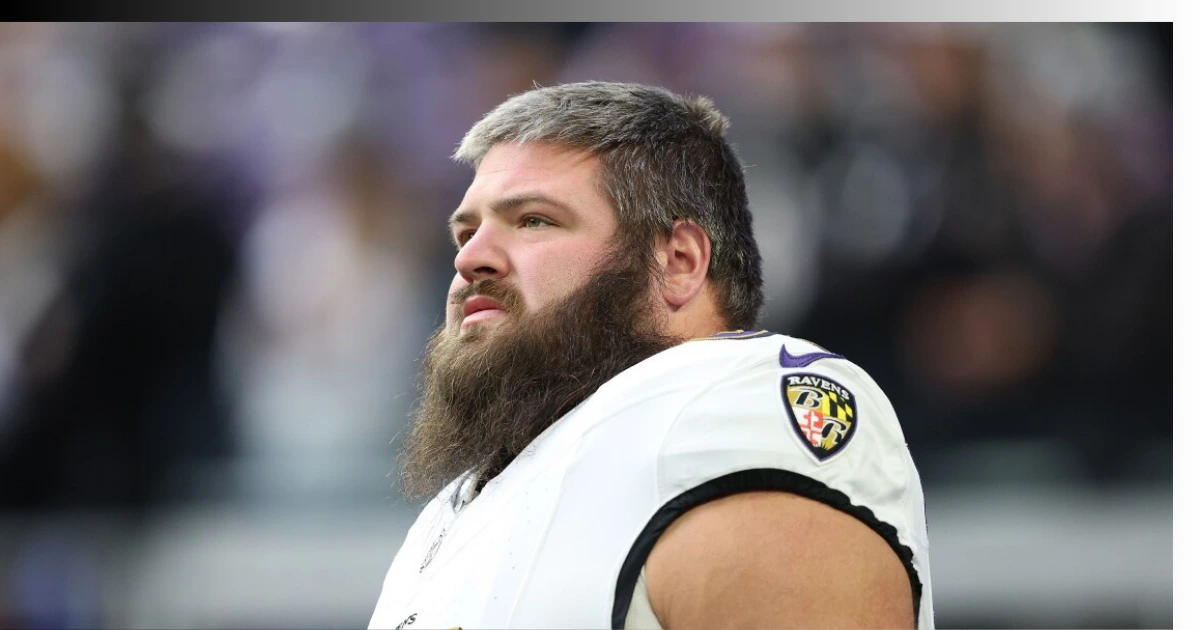
by The Baltimore Ravens‘ offensive line depth took a hit this week with the announcement of the Ben Cleveland suspension. The National Football League (NFL) officially suspended offensive lineman Ben Cleveland for three games without pay. This disciplinary action stems from a violation of the league’s Policy on Substances of Abuse. The news about the Ben Cleveland suspension arrives as the Ravens navigate the final stretch of their season, making the timing particularly challenging for the team’s depth chart.
The Details Behind the Ben Cleveland Suspension
The specific incident leading to the Ben Cleveland suspension is tied to an offseason arrest. In February 2025, Cleveland was arrested in Georgia on suspicion of driving under the influence (DUI). Police reports indicated that Cleveland’s blood alcohol content (BAC) registered at $0.178$, which is more than twice the legal limit of $0.08$. This DUI charge formed the basis for the subsequent NFL disciplinary action that resulted in the three-game Ben Cleveland suspension.
The 27-year-old guard, originally a third-round pick by the Ravens in the 2021 draft out of Georgia, recently negotiated a plea deal in November, receiving 12 months of probation. This finalization of the legal matter likely cleared the way for the NFL to issue the official three-game Ben Cleveland suspension.
On-Field and Financial Impact of the Suspension
While the Ben Cleveland suspension is a significant disciplinary measure, its immediate on-field impact for the Ravens is mitigated by Cleveland’s current role. The veteran offensive lineman has primarily served as a reserve this season, appearing in 10 games without a start. In fact, he had been a “healthy scratch” in the weeks leading up to the announcement, suggesting he was not factored into the immediate starting rotation. However, in the high-attrition environment of the NFL, the loss of a veteran backup due to the Ben Cleveland suspension severely reduces the team’s depth, which is crucial for protecting star quarterback Lamar Jackson.
The financial cost of the Ben Cleveland suspension is substantial for the player. Since the suspension is without pay, Ben Cleveland will forfeit one-eighteenth of his base salary for each of the three missed games. Given his $1.17$ million base salary, the suspension is estimated to cost him approximately $\$195,000$ to $\$207,000$ in lost wages. This financial penalty serves as a stern reminder of the serious consequences tied to the league’s substance abuse policy.
Games Missed and Return Timeline
The three-game Ben Cleveland suspension forces the offensive lineman to miss critical late-season matchups. He will be ineligible to play in the Ravens’ games against the Cincinnati Bengals, the New England Patriots, and the Green Bay Packers. These are all crucial contests as the Ravens vie for a strong finish and playoff positioning. The absence created by the Ben Cleveland suspension will test the team’s remaining interior line backups.
Cleveland is slated to be eligible to return to the Ravens’ active roster following the conclusion of the team’s Week 17 game. His potential first game back will be the regular-season finale against the Pittsburgh Steelers. This timeline means Ben Cleveland will be available for the postseason, provided the Ravens clinch a spot, which offers a small silver lining to the significant disciplinary action.
Broader Context of NFL Substance Abuse Policy
The swift and decisive action of the Ben Cleveland suspension highlights the NFL’s strict enforcement of its Policy on Substances of Abuse. This policy covers a wide range of prohibited substances and behaviors, including alcohol-related incidents like DUI, particularly when a player is subject to certain stages of the program. The league’s intent is to discourage off-field behavior that could harm the player, the public, and the integrity of the game. For players like Ben Cleveland, the enforcement is clear: off-field legal issues can directly translate into on-field punishment and financial loss.
The Ravens organization, while supporting its players, is bound to adhere to the league’s policy regarding the Ben Cleveland suspension. They will now rely on players like John Simpson, Kevin Zeitler, and other reserves to maintain continuity and protection along the interior offensive line in Cleveland’s absence.
Conclusion
The three-game Ben Cleveland suspension for violating the NFL’s Substances of Abuse Policy is a stark reminder of the accountability professional athletes face both on and off the field. While the Ravens have the immediate depth to manage his absence, the disruption is notable as they push toward the playoffs. Ben Cleveland will now focus on his responsibilities during his time away and prepare for his return for the final game of the regular season.