 by
by Finding a talented quarterback is only the first step toward building a championship team. The bigger challenge is turning that young passer into a long-term leader capable of winning playoff games and Super Bowls. Understanding how NFL teams develop rookie quarterbacks has become one of the league’s most important topics as franchises invest millions of dollars in first-round draft picks. In today’s NFL, successful quarterback development combines coaching, analytics, leadership training, and organizational stability more than ever before.
Why How NFL Teams Develop Rookie Quarterbacks Has Become a Bigger Focus
The modern NFL places enormous expectations on rookie quarterbacks. Fans want immediate success, owners expect playoff contention, and coaches face pressure to deliver quick results. This explains how NFL teams develop rookie quarterbacks using structured development plans instead of throwing them into difficult situations too early.
Recent seasons have shown that patient organizations often achieve better long-term results by allowing young quarterbacks to learn professional offenses before becoming full-time starters. Teams are investing more resources into quarterback-specific coaching than at any point in league history.
How How NFL Teams Develop Rookie Quarterbacks Starts Before Training Camp
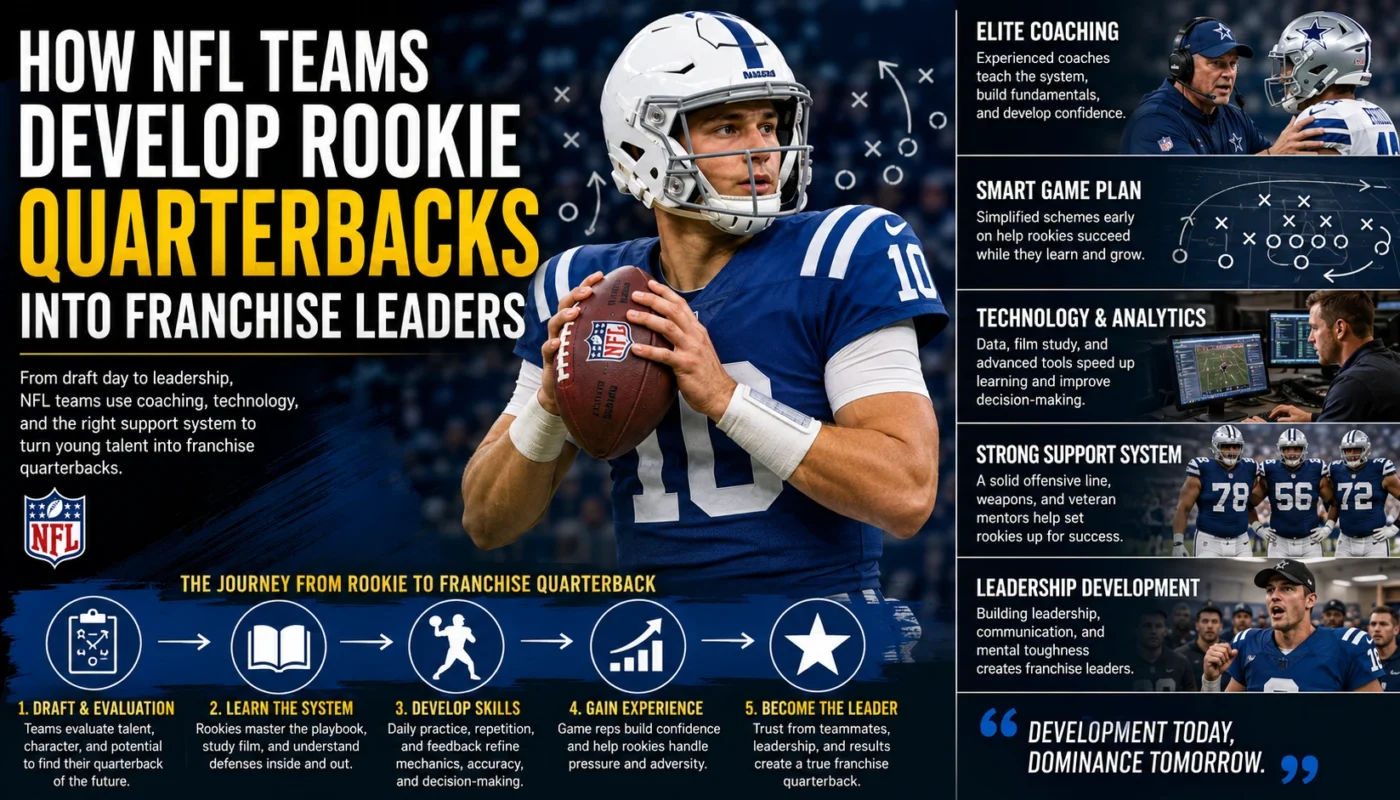
Quarterback development begins immediately after the NFL Draft. One reason how NFL teams develop rookie quarterbacks has improved is because franchises start teaching their offensive systems long before the regular season begins.
Rookies spend weeks learning:
- Playbook terminology
- Defensive recognition
- Film study habits
- Pocket movement
- Leadership expectations
- Communication techniques
These early months help reduce the learning curve once training camp begins, allowing young quarterbacks to focus on execution rather than memorization.
Coaching Plays the Biggest Role in How NFL Teams Develop Rookie Quarterbacks
Coaching remains the foundation of successful quarterback development. This is why how NFL teams develop rookie quarterbacks often depends on experienced offensive coordinators and quarterback coaches who understand how to build confidence while correcting mistakes.
Rather than overwhelming rookies with complex game plans, coaches install offenses gradually. Weekly film sessions, individual drills, and simulated game situations help quarterbacks improve decision-making without sacrificing confidence.
Organizations with coaching continuity generally produce more successful franchise quarterbacks over time.
Offensive Line and Supporting Talent Matter in How NFL Teams Develop Rookie Quarterbacks
Even elite quarterback prospects need help. That’s another reason how NFL teams develop rookie quarterbacks depends heavily on roster construction.
Teams increasingly surround young passers with:
- Reliable offensive lines
- Strong running games
- Experienced receivers
- Productive tight ends
- Veteran backup quarterbacks
This balanced approach allows rookies to develop naturally instead of carrying the offense every week. Stable supporting casts often accelerate quarterback growth while reducing unnecessary pressure.
Technology Is Changing How NFL Teams Develop Rookie Quarterbacks
Modern technology has transformed how NFL teams develop rookie quarterbacks across the league.
Today’s franchises utilize:
- Virtual reality practice systems
- AI-assisted defensive recognition
- Advanced tracking analytics
- GPS performance monitoring
- High-speed practice film
- Biomechanical throwing analysis
These tools provide immediate feedback, allowing quarterbacks to correct mistakes faster than previous generations. Technology has become an essential part of modern player development.
Recent NFL Trends Highlight How NFL Teams Develop Rookie Quarterbacks
The NFL continues to evolve toward quarterback-friendly offensive systems. This trend illustrates how NFL teams develop rookie quarterbacks by designing schemes around each player’s strengths rather than forcing them into rigid systems.
Many offensive coordinators now incorporate college concepts such as:
- Run-pass options (RPOs)
- Quick-release passing
- Designed quarterback movement
- Simplified progressions
- Spread formations
These adjustments help rookies transition more smoothly into professional football while gradually expanding the playbook.
Leadership Is a Critical Part of How NFL Teams Develop Rookie Quarterbacks
Playing quarterback requires far more than physical talent. Another key aspect of how NFL teams develop rookie quarterbacks involves leadership development.
Young quarterbacks learn how to:
- Command the huddle
- Handle media attention
- Build locker-room trust
- Respond to adversity
- Maintain confidence after losses
- Set the daily standard for teammates
Veteran mentors often play an important role in helping rookies become respected leaders both on and off the field.
The Biggest Challenges in How NFL Teams Develop Rookie Quarterbacks
Despite improved coaching methods, how NFL teams develop rookie quarterbacks remains one of football’s most difficult challenges.
Common obstacles include:
- Complex defensive disguises
- Faster pass rushes
- Public expectations
- Media pressure
- Frequent coaching changes
- Early career injuries
Organizations that remain patient during inevitable growing pains generally give their quarterbacks the best opportunity for long-term success.
Future Prediction: Quarterback Development Will Become Even More Personalized
Looking ahead, how NFL teams develop rookie quarterbacks is expected to become increasingly individualized.
Future development programs will likely include:
- AI-generated practice plans
- Personalized throwing mechanics
- Cognitive reaction training
- Virtual defensive simulations
- Real-time decision analytics
- Customized recovery programs
Instead of using identical systems for every player, coaches will tailor development around each quarterback’s unique strengths and weaknesses.
Future Impact on the NFL
The future of how NFL teams develop rookie quarterbacks will shape roster construction across the league.
Franchises are expected to invest even more resources into quarterback development departments, sports science, analytics, and mental performance coaching. Teams that consistently develop young quarterbacks internally will gain a significant competitive advantage while managing the salary cap more efficiently.
As rookie contracts continue providing financial flexibility, organizations that maximize quarterback development will be better positioned to build championship-caliber rosters around their young stars.
Final Thoughts
Understanding how NFL teams develop rookie quarterbacks reveals that success rarely depends on talent alone. Elite coaching, organizational stability, offensive support, advanced technology, and strong leadership development all contribute to transforming promising rookies into franchise quarterbacks.
The modern NFL rewards patience, preparation, and long-term planning. While every rookie’s journey is unique, the teams that invest in complete quarterback development—not just physical ability—are most likely to build sustainable contenders for years to come.
Frequently Asked Questions
How long does it take an NFL rookie quarterback to develop?
Most quarterbacks require two to three seasons to fully adjust to NFL speed, defensive complexity, and leadership responsibilities.
What is the biggest factor in quarterback development?
Coaching continuity, offensive line protection, and a stable supporting cast are among the most important factors.
Why do some rookie quarterbacks succeed immediately?
Strong coaching, simplified offensive systems, and talented teammates can help accelerate a rookie’s transition to the NFL.
Will technology continue changing quarterback development?
Yes. AI, virtual reality, biomechanics, and advanced analytics are expected to play an even larger role in developing future franchise quarterbacks.